


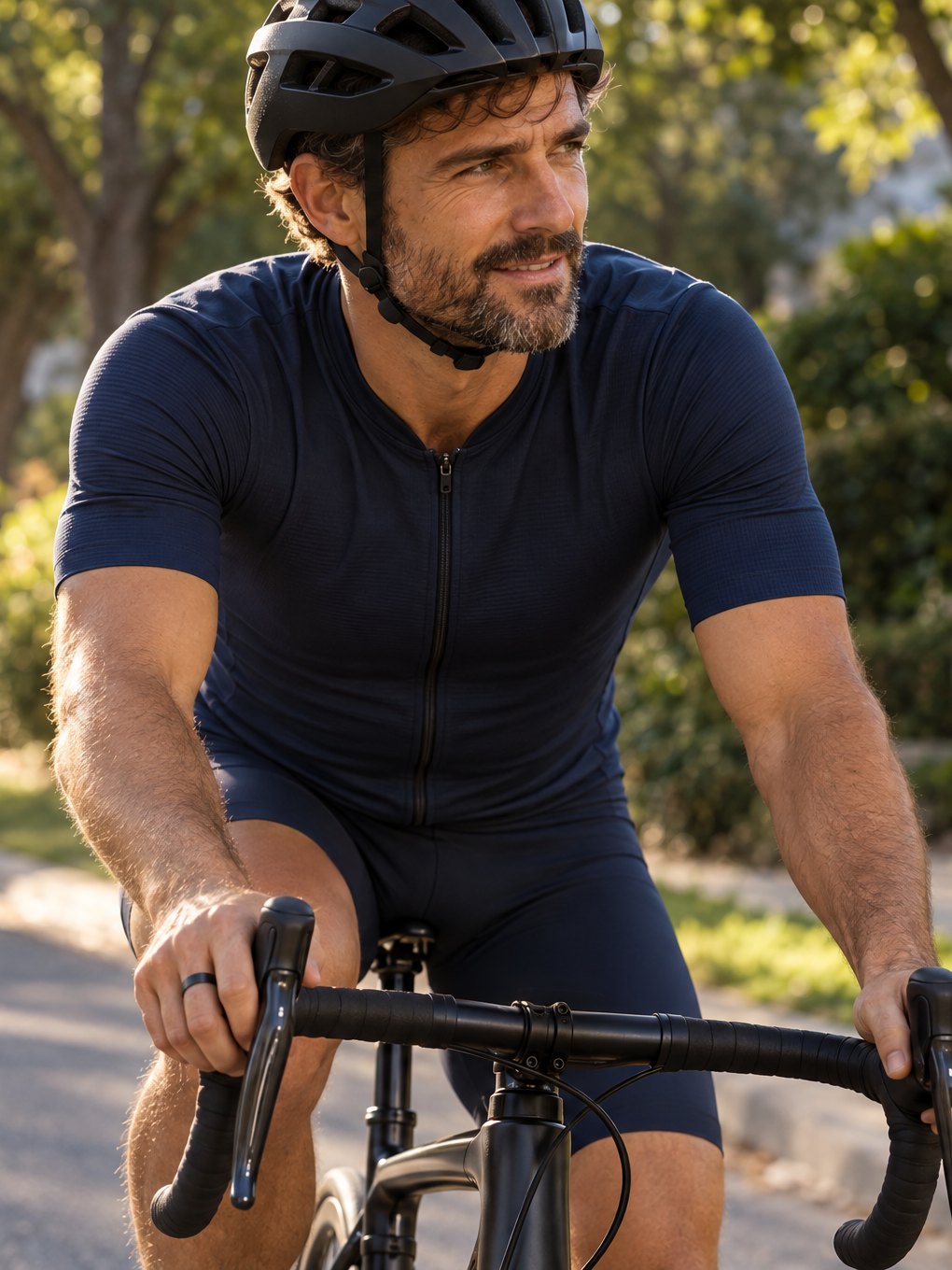
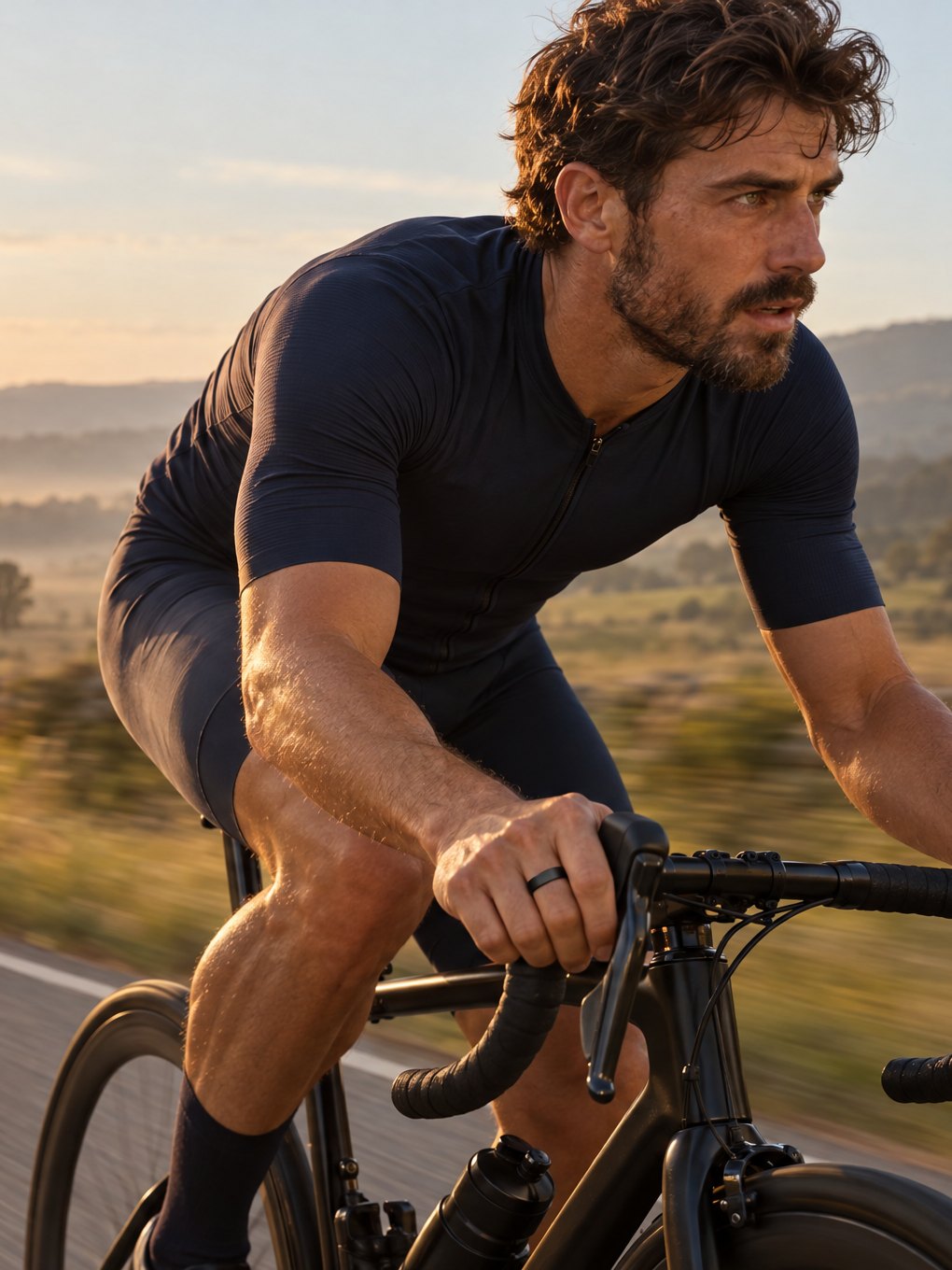
“MARCO kept me from blowing up at the wrong moment three different times across 28 hours of riding. Fueling reminders alone earned the subscription.”
HHenrik SørensenVerified buyer

HELIOS 2.0
Matter schwarzer Smart Ring aus Titan, der deinen Körper Tag und Nacht ausliest. 2,1 g, 7–10 Tage pro Ladung, Reise-Ladecase im Lieferumfang.

Farina + Free Cliq
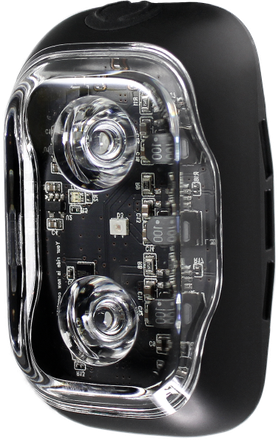
Smarte Front- und Rücklichter, die in der Dämmerung angehen, beim Bremsen aufleuchten und über den Ride-Modus von THRIVE laufen.
Warum THRIVE
Was THRIVE für dich auf dem Rad tut, Ziel für Ziel.
Read this before you put another season down to your age.

You still ride the hours. You still do the hard days. And the climb you used to lead is the climb you now get dropped on. The obvious answer is the birthday. On r/cycling, one cyclist gave that answer to a younger one asking about rest days:
“It might be a hard pill to swallow, but you're getting older and your performance is going to naturally decline in subtle ways... it doesn't hurt any less, you just go slower... I have learned to do less with less, and tried to appreciate what I can do.”
u/eddywouldgo · r/cyclingAge does change one thing: how long a hard day takes to come back from. If the week doesn’t change with it, every hard ride lands on one you haven’t recovered from, and that reads exactly like getting old. Your bike computer records the slower times. It can’t tell you which of the two it is. These six signs can.

Tuesday intervals, the Wednesday chain gang, a hard Thursday, the Saturday ride raced from the first hill. It worked for fifteen years, so you never changed it. The hours aren’t the problem. Four hard days with nothing easy between them is.
Endurance athletes who trained mostly easy, with a few hard sessions, lasted 17.4% longer to exhaustion after nine weeks (Stöggl & Sperlich, 2014).

At 35 you could go hard on Tuesday and again on Wednesday. Now Wednesday’s legs are Tuesday’s legs, and you ride them anyway. One cyclist described what that looks like from the inside:
“I realize now that my age has an effect on recovery. I must be constantly in recovery deficit, as my resting heart rate just doesn't bounce back like it used to. 20 years ago two-a-day workouts were no problem. Those days are gone”
@krehme · YouTube, under a video on overtrainingHe’s half right. The recovery takes longer. The deficit is a choice the plan keeps making for him.
Cyclists whose training was set day by day from their HRV improved their 40-minute time trial by 7.3% in eight weeks (Javaloyes et al., 2019; a change within that group).

Six hours got you through your thirties. The training hasn’t eased off, so the night has to do more work than it did, and it’s doing less. A 54-year-old who now beats the younger cyclists on his local trails put his whole method in one line:
“as I age my recovery takes a bit longer therefore I'm sure to eat healthy and SLEEP SLEEP SLEEP. GOOD SLEEP IS KEY”
@josephdunbar2105 · YouTube, under a video on overtrainingCyclists who slept longer for three nights rode an hour-long time trial about two minutes faster (Roberts et al., 2019).

Same breakfast, same lunch, same dinner, whatever the ride. The hard days go under-fuelled, the protein falls short, and the recovery you’re already short of gets shorter. Your bike computer tells you what you burned. It doesn’t tell you what tomorrow needs.
Carbs plus protein after a ride restored 27% more muscle fuel in four hours than the same carbs alone (Ivy et al., 2002).
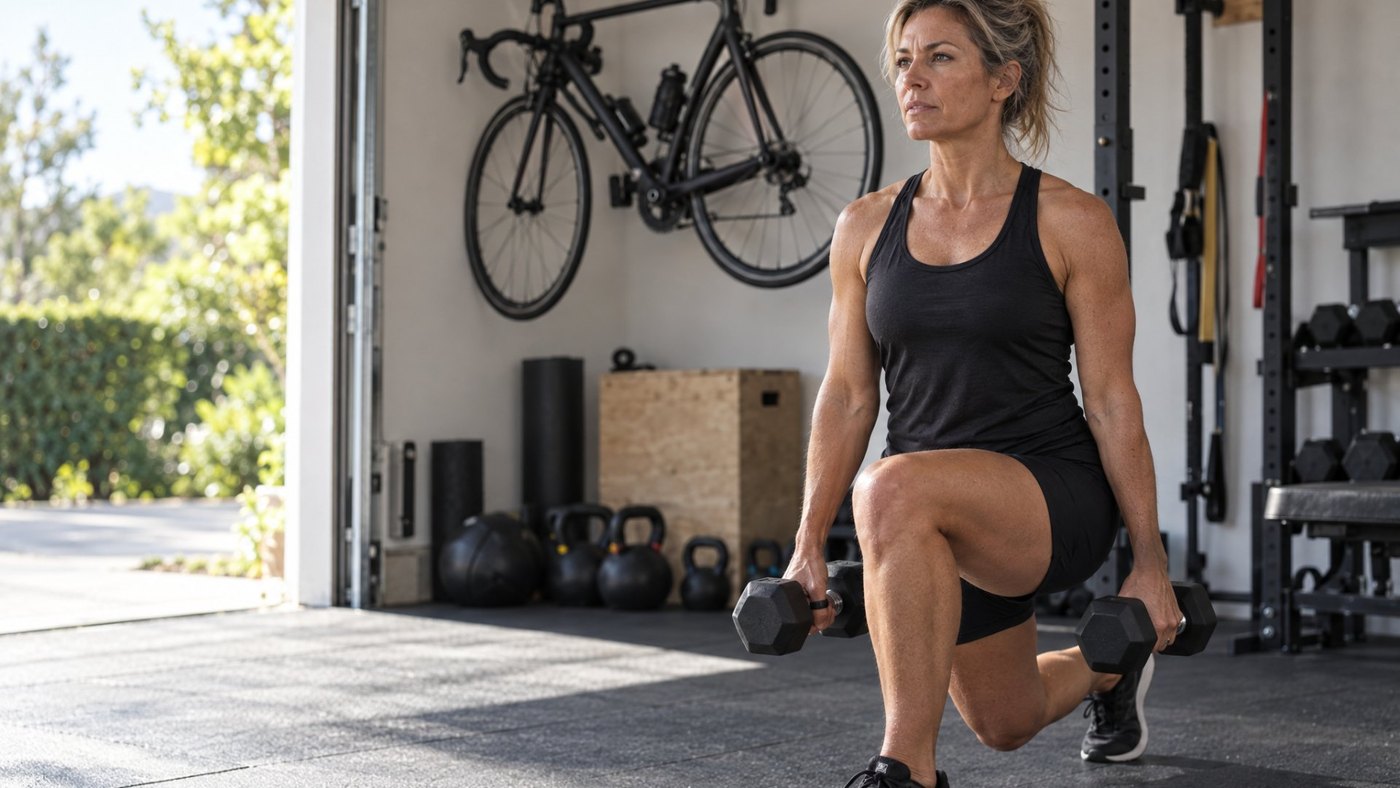
When the speed drops, the usual answer is more riding. The gym never makes the week. But the top-end power is the first thing to go, and riding more doesn’t bring it back.
Cyclists who added 12 weeks of heavy strength training to their riding had 7.8% more five-minute power at the end of a three-hour ride (Rønnestad et al., 2011).

A bigger job, a family, travel, a parent who needs you. None of it is in a ride file, and all of it costs recovery the way a hard ride does. You feel it as heavy legs on a day that should have been fine, and you call it age.
Put the six together and they come from four places: the load you put on yourself, the strain you carry, the sleep you get and the food you eat. Age raises the price of getting any one of them wrong.
The same week, at 35 and at 50
Two example weeks, not a measurement: the same hours, and where the hard days fall against recovery.
So the answer isn’t to do less with less. It’s the same hours on a plan that knows how recovered you are: something you wear every night and all day for your sleep and your strain, a plan that sets your training and your food, your phone as the bike computer, and an AI coach that watches all four at once.
In 2026 there was no product on the market that could see every necessary data point, tie it all together and give you one consolidated feedback loop. So we built one.
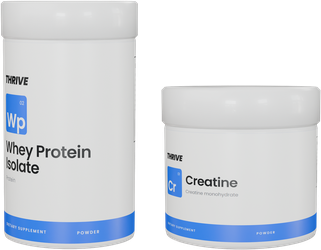
HELIOS 2.0 is the world’s thinnest and lightest smart ring: 2.0 mm thin, 2.1 g, 7–10 days a charge and another 3–4 weeks in its travel charger, so it stays on every night and all day. That’s your sleep and your strain, measured. THRIVE sets your training load, with the hard days capped and strength on the right days, and sets every day’s food to that day’s training, counted in your recovery. In ride mode your phone is the bike computer. MARCO, the AI coach inside it, watches all four at once, changes the plan when one of them moves, and explains every change. It isn’t a medical device and doesn’t diagnose anything.
✓ 30-day money-back trial · 90-day results guarantee · Free shipping
Stock is limited: 100 HELIOS 2.0 rings this month

Here it is on the real app screens, start to finish.
You’re 52 and six weeks into a build. You feel good, so Tuesday’s easy ride becomes a hard one on the club loop. Wednesday is a 12-hour workday, two nights come in under six hours, and Friday’s threshold session is due after a day of eating light. At 35 you’d have got away with it.
An example week. Red is where it starts to cost you.
 Recovery 45 · rest required · all four named
Recovery 45, rest required. MARCO names all four: an easy day ridden hard, strain high two workdays running, sleep under baseline with HRV down three nights, and two days under-fuelled. Friday’s threshold moves to Sunday, with the food to match. The week is reworked, training, food and bedtime, ready for you to accept.
THRIVE brief for the example week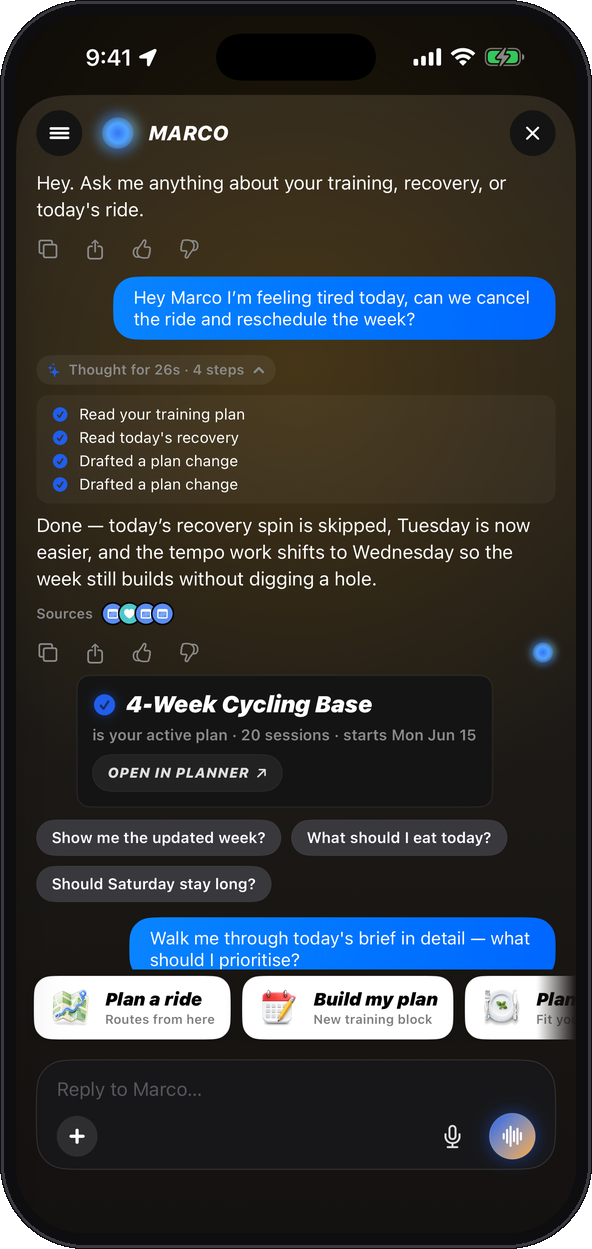 Session skipped · next one eased · tempo moved
Accept it, or ask MARCO about it, and the change is made in front of you: Friday becomes an easy spin and the threshold session moves to Sunday, so the build still lands.
Real THRIVE screen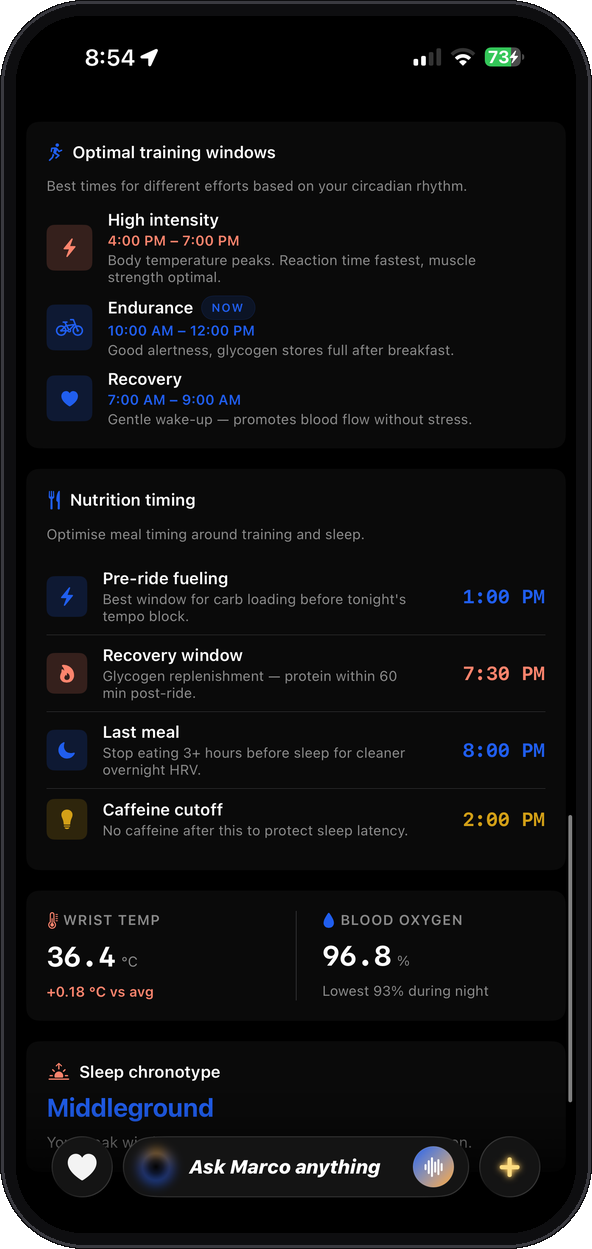 Food timed to the session · sleep protected
Fuelling is timed to the new session, protein within the hour after it, the last meal three hours before bed for cleaner overnight HRV, and a caffeine cutoff to protect your sleep.
Real THRIVE screenThat’s sign 2, answered on day five instead of at the end of another slow season. Nothing for you to work out. The plan changed, and the reason came with it.
A bike computer sees your rides. A smartwatch sees the nights you wear it. Neither sees your strain, your food or your week. THRIVE is built to do all of it.
| HELIOS 2.0 | Bike computer | SmartwatchToo bulky to sleep in | |
|---|---|---|---|
| Records the ride: live power, maps, navigation | ✓ | ✓ | ✓ |
| Training load: hard days capped across the week | ✓ | ✕ | ✕ |
| Strain: tracked day and night | ✓ | ✕ | ✓ |
| Sleep: tracked every night | ✓ | ✕ | ✓ |
| Nutrition: set to each day and counted in recovery | ✓ | ✕ | ✕ |
| All four on one plan, changing together | ✓ | ✕ | ✕ |
| An AI coach watching all four | ✓ | ✕ | ✕ |
Smartwatch: “Records the ride”, “Strain” and “Sleep” are Limited: only while it’s on your wrist.
They sell devices. A bike computer is sold on the ride, a watch on the wrist. Neither is paid to plan a 50-year-old’s whole week, so neither does. THRIVE was built the other way round: the plan first, and one ring to keep it up to date.
“MARCO flagged ‘three days of suppressed HRV and elevated resting HR — recommend two days easy’. I ignored him, did the threshold workout, blew up. Now I listen.”
Camille Dufort · Verified buyer
The front of the group, again
What do you want from the hours? Not a gentler hobby. The climb you used to lead, led again. A Saturday where the legs are there because the week was built for a 50-year-old and not a 35-year-old. Years more of riding with the people you’ve always ridden with, at their speed.
One cyclist of 50 had already found the first piece on his own:
“As an older rider (50) I find a reduced training week every 5-6 weeks before ramping back up again really helps my body recover and consolidate any gains I have made.”
@danmashman2500 · YouTube, under a video on how much riding makes you fasterHe worked that out by trial and error. Planned, fed, slept on and watched, the same hours do it for you.
Results that speak for themselves
“MARCO kept me from blowing up at the wrong moment three different times across 28 hours of riding. Fueling reminders alone earned the subscription.”
“I have sensitive skin and a chest strap was hell on every long ride. This replaces it and the readings are within 1-3bpm of my old strap on intervals.”
“The sleep insights and the gentle prompts about caffeine timing have changed my evenings. I sleep 40 minutes more on average.”
The world’s slimmest and lightest smart ring: 2.0 mm thin, 6.5 mm wide and 2.1 g of matt black titanium, so it stays comfortable on the bike, at work and asleep. It fits under cycling gloves.
It comes off because it’s bulky in bed or on the bars, or because it needs charging, so whole nights and days go missing.
Typically pretty ugly, and not something you wear to work or to dinner, so it comes off and the gaps start again.
Thin and light enough to sleep and ride in, beautiful enough for work and dinner, and 7–10 days a charge, with 3–4 weeks more in the travel charger. It stays on.
“Stupid as it sounds, this is the first wearable I haven’t taken off in 6 weeks. No bulk, sits flat under my work glove, charges in 45 min.”
Owen Bartlett · Verified buyer✓ 30-day money-back trial · 90-day results guarantee · Free shipping
Stock is limited: 100 HELIOS 2.0 rings this month
Here’s what the setup most of us run costs. Each piece sees one of the four at most, and none of them sees them together.
US list prices, checked August 2026.

For readers of this page: your 90-day guarantee is set on your riding, not on your age.
Stock is limited: 100 HELIOS 2.0 rings this month
Get HELIOS 2.0 →✓ 30-day money-back trial · 90-day results guarantee · Free shipping
HELIOS 2.0 is not a medical device. Individual results vary.
Wear it for 30 days. Not for you? Send it back for a full refund.
Your target is set on your riding, with our team, after your first week: for example, your FTP in the app higher at day 90 than in week one. Miss it and we refund you in full.
Plus a 2-year warranty, free shipping and a free sizing kit before you commit.
Age makes recovery take longer. It doesn’t decide how you train, eat and sleep around that. Most of the six signs above are a week that hasn’t changed since 35, and that part can be planned.
No. It caps the hard days and makes the easy days real, so the hard days you do ride land on a day you’ve recovered. The hours can stay the same.
No. It doesn’t diagnose anything. It tracks your resting heart rate, HRV, sleep, blood oxygen and skin temperature every night, and THRIVE uses that to plan your training, food and recovery.
Yes. Strength sessions built for cyclists sit in your plan twice a week, on the days they don’t cost you a hard ride.
A free sizing kit ships first so the size is right. Then you have 30 days from delivery for a full refund.
Keep riding the week you rode at 35 and call the result age.
Put the same hours on a plan that knows how recovered you are, watched day and night, with 30 days to send it back.
✓ 30-day money-back trial · 90-day results guarantee · Free shipping
Stock is limited: 100 HELIOS 2.0 rings this month
